


Page 142 - Bollettino di Numismatica on line Studi e Ricerche n. 3-2017
P. 142
Carte autografe e altri documenti


                3  William Richard Hamilton (lettera 1, nota 6).
                4  Per la meno ricercata, ma più economica incisione in conchiglia v. Billing 1875, pp. 73-74: “but there are beautiful ornaments, the shell
                cameos [...] which are made from the shell of animals which still exsist in the sea. These shells, called bull-moth (strombus) helmet (cassis) &
                when cut through, are found to consist of two layers: the outside one is white; the inner, either dark brown, like sard, or pink, orange or yellow.
                These being not harder than marble, do not require diamond to engrave them, but, like marble, are cut by small steel chisels, called “gravers”
                they take a fine polish, and are admirably adapted for portraits; the only disadvantage being, that the dark ground is liable to crack. Shell
                cameos are more less expensive than those in stone - pietra dura - and no being known to the ancients, the latin word gemma (gem) has never
                been applied to them. The reason that the ancients did not employ shells for cameos is, that the Greeks and Romans had not the beautiful sheffils
                above named, which are now used, and which come from the new world, the West Indian seas, and from the savage West Coast of Africa, nearly
                as little known by them’’. Su quest’ultimo punto una diversa opinione è in king 1860, p. 151.
                5  Probabilmente l’incisore in pietre dure Giovanni Calandrelli (Roma 1784 - Berlino 1852), a Berlino dal 1832. Da ultimo v. L’Antica maniera
                2005.
                6  BranCadoro 1834, p. 75: “Carnesechi Francesco, negoziante di camei, mosaici ed altri oggetti di belle Arti via Condotti n. 74”; Manuale di
                notizie 1839, p. 119.
                7  V. lettera 49.
                8  V. lettera 50.
                9  La Beatrice Cenci di Guido Reni incisa da Luigi Calamatta (PetruCCi 1953, p. 165, n. 736).
                10  Forse la Maddalena di Guido Reni incisa da Domenico Cunego (PetruCCi 1953, p. 165, n. 715).
                11  Lettera 49, nota 8.
                12  Charles Robert Cockerell (lettera 27, nota 6).


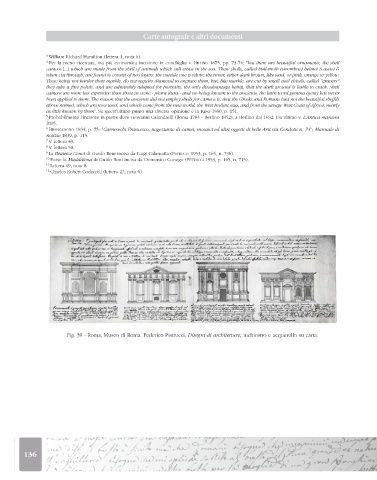
                       Fig. 39 - Roma, Museo di Roma. Federico Pistrucci, Disegni di architetture, inchiostro e acquerello su carta.


         136

